Showing posts with label Red-Winged Blackbird. Show all posts

Wednesday, February 4, 2015

Winter Reveal! Look Who Was Living Here!

When the leaves drop I am always AMAZED at who was living so close to me and I didn't EVEN know it. Take a look...
A Bald-Faced Hornet nest in the parking lot.
Robin Nest Made of Mud, Grass and Sticks
Red Winged Black Bird Nest in Marsh

Bird Nest Made of Small Sticks in Marsh-Bird Unknown


 Muskrat Home on Edge of Marsh
A Squirrel's nest known as a DRAY.
A Squirrel's nest has leaves rather than sticks or grasses.


Click for More About... 
...Robins    
AND a KOOL thing to do...

Saturday, November 2, 2013

And the Seasons, they go Round and Round--its Fall Again.

Hummingbird visits the office feeder for a sip.
WOW...time really does fly! My last post was Spring and now it is late Fall.
...the HUMMINGBIRDS have already left after stoking up for the long flight further south of the United States,
...the BATS have already left for their warm caves (55 degrees year around),
...the WOODCHUCKS are already in their burrows for the winter, fat from a summer of eating well,
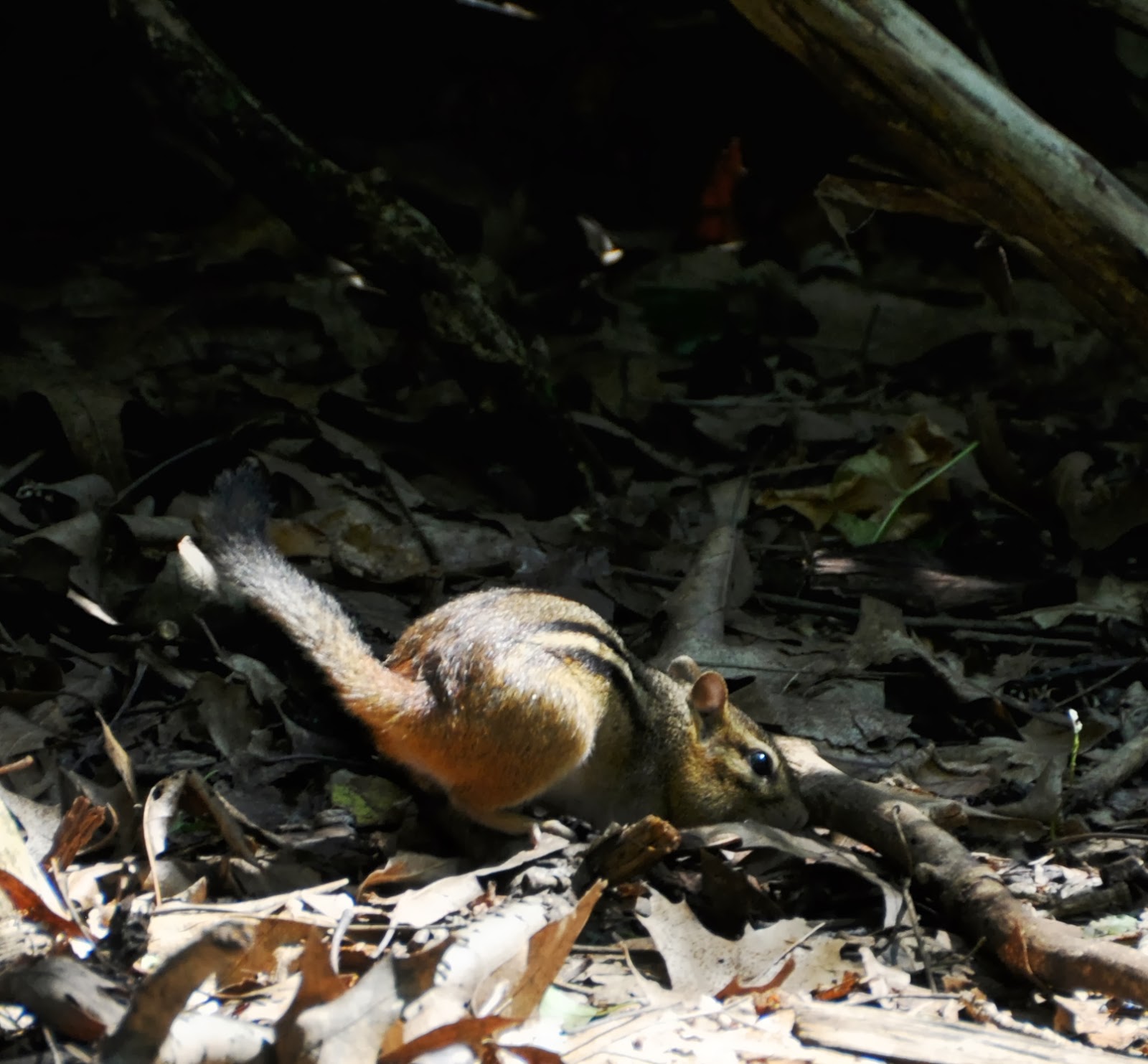
This Chipmunk is looking for nuts to take back to his burrow.

...the CHIPMUNKS have finished scampering around for nuts and we haven't seen them for the last few weeks so they must be snug in their underground burrows for the long winter, How do I know it will be a long winter? See below for information about the WOOLLY BEAR.
...the AMERICAN COOTS are gathering on the lake for the last leg of their journey to more southern states like Kentucky or even as far south as Florida,
...the RED WINGED BLACKBIRDS have left, but wait, after almost a month of not seeing or hearing them, I just heard them again. This must be a small group resting here on our lake from their trip starting further north.
A CONFUSED Woolly Bear caterpillar!
...this WOOLLY BEAR caterpillar is confused! Most woolly bear caterpillars have a brown stripe in the middle with two black stripes on each end. Folklore claims that the brown stripe is a predictor of the winter weather. A wide brown stripe means a mild winter and a thin brown stripe means a hard winter. I am not sure what THIS caterpillar is forecasting.


Looking northeast across the bay at House In The Wood.
 ...the trees are blazing with the bright colors of fall,
 ...the acorns and hickory nuts have fallen,
 ...the plants have spread their seeds,
 ...and the leaves are drifting down with every breath of wind.


For more information on House In The Wood go to www.houseinthewood.com
All rights reserved 2013 by Valerie J Wright


Thursday, April 26, 2012

The Marsh at House In The Wood

 I feel very lucky that every day on my way to and from the House In the Wood office and my home down the road I get to walk through the marsh, lake and forests at the center.


 I see this bird all of the time now. On-ka-lee! I hear it loud and clear as I walk through the marsh on both sides. Flocks of male Red Winged Blackbirds arrived a few weeks ago to stake their claim to the BEST nesting spots. You know, just like you do--to get the best sale, the best tickets, the best seat--you arrive early. They spread their wings to show the red patches and shot it loud and proud--ON-KA-LEE--this is my territory!


Soon the brown streaked females will arrive and the males with the best nesting places will attract the most females. And then LOOK OUT! The males will protect the nest. Terry was walking along the road with me and he was dive-bombed by the male bird, I wasn't. He was wearing red and I was wearing blue!


Soon the brown of the Spring Marsh will be vibrant green. The cattail pictured here will burst and spread its seeds on the wind. Cattails will be growing as far as you can see in the marsh. They are an important source of food and shelter for the birds and animals in the marsh.


This is a poster of a wetland scene from my favorite nature site EEK.

Wetland ecosystems are extremely valuable to wildlife, supporting a greater number of animals than any other type of habitat. Wetlands also absorb flood waters; filter chemicals, sediments, and other impurities out of drinking water; recharge groundwater; and provide a variety of recreational opportunities.


House In The Wood owns 13 acres of wetland! We are so lucky that we have a chance to watch this very special (and did I mention it is totally kool) HABITAT.

The center is on "well water" which means that we pump up the ground water from deep under the earth. We depend on wetlands to filter our water for us.

How many of these animals and plants are at House In The Wood? 
Post a Comment.

For more information on House In The Wood please go to our website at www.houseinthewood.org
We are operated by